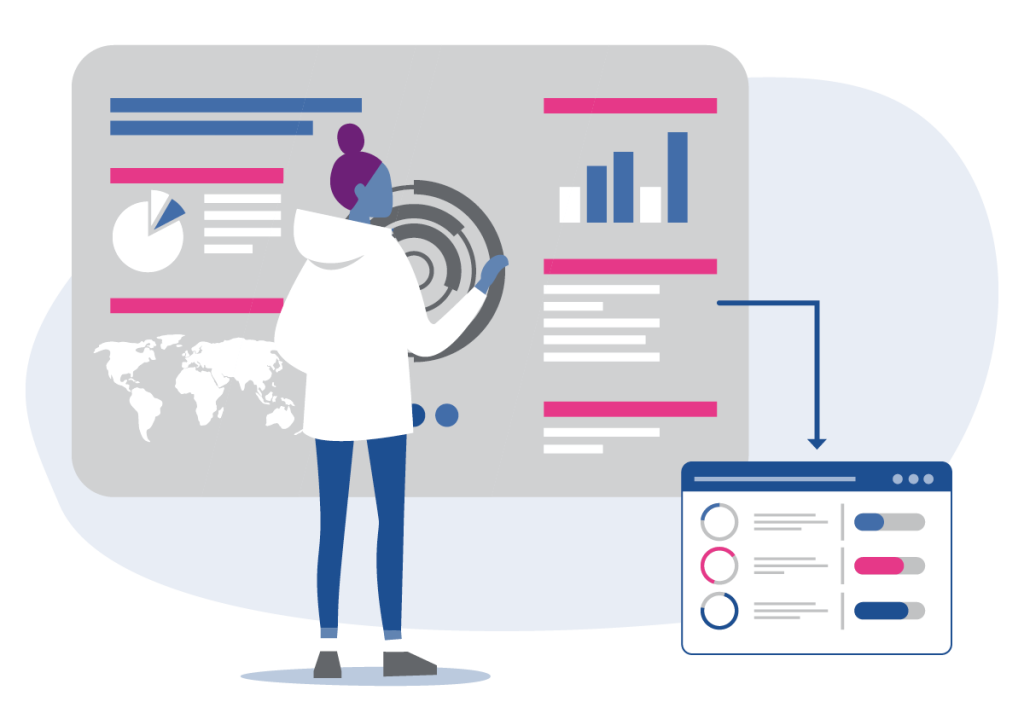
While the critical importance of data quality is universally understood in financial services, the methods for achieving and maintaining it are evolving. Recent research suggests that a strategy termed “data quality democratisation” may be the key to helping companies cost-effectively maintain better quality data across their operations.
Access to good data is foundational to decisions and processes within financial services. Beyond ensuring compliance, and thereby preventing potential fines and reputational damage, high quality data is the essential key to safe growth.
Today’s customers are increasingly demanding real-time services, personalised features, and a superior customer experience. Meeting these expectations is only possible when you have accurate, recent, and actionable data at your disposal.
So what is data quality democratisation?
In short, data quality democratisation means enabling more people within the organisation to contribute to the challenge of improving data quality. This shift is particularly important to financial services, where accurate client data is mission critical. Poor data quality can directly impact regulatory compliance, financial accuracy, customer trust and ultimately business performance.
Instead of treating data quality as a technical problem for IT to solve in isolation, democratisation makes high-quality data accessible to more people across the business. From product managers and risk teams to customer service leads, it empowers those who actually use the data to drive the business forward. The result? Fewer bottlenecks, faster decisions, and more confident business outcomes.
How to democratise data quality
Data quality improvements in financial services are moving from reactive data cleaning toward proactive, enterprise-wide data governance that supports automation, advanced analytics, compliance, and ultimately, growth.
Responsibility for data quality often falls between the gaps – with only 1 in 4 organisations having clarity on data ownership. However, by strategically employing the right tools, technologies and governance strategies, financial services companies can implement robust data strategies, shifting data quality from being a heavy burden for the few to a valuable business opportunity for the organisation.
More details can be found in our whitepaper: “Why data quality is being democratised – and how it is driving business success”. Read it now to find out:

Why the democratisation of data is critical for the financial services sector
The barriers to democratisation and how to overcome them
The tools and techniques required to achieve democratisation
The business benefits that ‘data-democratic’ financial services can expect
How can we help?
The intense competition levels in financial services necessitates high-quality data. Data quality has become a critical focus for companies seeking to gain a competitive advantage. Now, there may be a faster and more cost-effective way of achieving data quality and unlocking new opportunities.
Read our report
Why data quality is being democratised – and how it is driving business success
Download nowFurther reading

Fraud Index Report: Q1 2026
How has fraud changed over the past year? Read the latest fraud statistics and trends in Experian's Fraud Index Report for Q1 2026.
How lenders win on price comparison websites
Explore how real‑time optimisation, data‑driven decisioning and self‑serve strategy tools help lenders compete and maximise profitability on PCWs

London Zoological Society Address Validation
Explore how London Zoo improved data accuracy, streamlined processes and enhanced customer experience using our Address Validation.

Data Segmentation: Your Expert Guide
Understand what data segmentation is and why it’s vital in creating more efficient business decisions and a better customer experience.

Your guide to account takeover
Learn what account takeover fraud is, why it’s rising, and how biometrics and device intelligence offer smarter, real-time protection.

Experian ranked 6th in 2025 IDC FinTech Rankings: Top 100
Experian has earned a top-tier position in the 2025 IDC FinTech Rankings of the Top 100 companies., securing a place in the global top 10.

Why effective data governance is the foundation of regulatory compliance
Explore how data governance tools help regulated firms tackle silos, quality issues, and reporting burdens to boost compliance and efficiency.

Keeping your payments safe: your guide to payments and transaction rules
Learn how your B2B payments and transactions remain secure when you verify bank accounts under regulations like PSD2.

Why should energy and water utilities companies share data with Credit Reference Agencies?
For decades, it has been standard practice for businesses to share information with CRAs to support responsible lending. But not all utilities providers do.

Guide
Data Minimisation: Guide to Collect Less, Protect More
Learn what data minimisation is, why it’s vital for compliance with GDPR, and how you can implement a simple but effective data minimisation process

14 December 2025
read
Why does data minimisation matter?
Data minimisation helps you meet personal data obligations, reduce security risks, and comply with key GDPR rules. It supports good customer service and also protects user privacy, as storing less data lowers the risk of data breaches. Collecting only relevant information can lead to clearer insights and more effective services and products.
What is data minimisation?
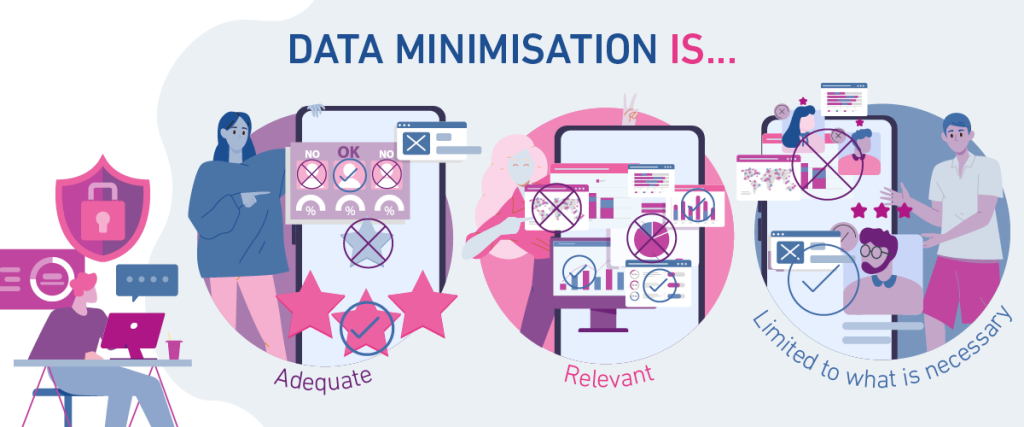
Data minimisation requires organisations to only collect, process and store data the minimum amount of personal data required for the specific intended purpose. It is a key principle of data. Under General Data Protection Regulation (GDPR), data minimisation is considered a core principle which outlines that data should be:
- Adequate
- Relevant
- Limited to what is necessary for the purposes for which they are processed.
In practice, data minimisation means your business should only collect the data needed for legitimate reasons and not gather any excessive or irrelevant information. You must also only store it for as long as necessary to fulfil its intended purpose, and regular reviews must be in place to prevent inaccuracies and ensure data is up to date.
Key takeaway
Data minimisation ensures you only collect, use, and store data that is relevant to your business needs. Adhering to this principle mitigates against data breaches and protects user privacy.
Data minimisation and GDPR
Data minimisation is vital in complying to GDPR regulations and fulfilling your company’s personal data obligations. Related to this is the accountability principle.
This states you must take responsibility for what you do with personal data, and be able to show you have the right processes in place to ensure you only collect and hold the specific data you require.
Data retention policies are also important. They ensure you keep data only for as long as needed. Regular audits help you stay compliant by checking, organising, and deleting data when necessary. Both data retention and regular audits support the storage limitation principle as set by the Information Commissioner’s Office (ICO).
The ICO stance is that businesses shouldn’t have more personal data than is necessary to achieve a purpose, and that data shouldn’t include irrelevant details.
Example
To understand data minimisation in context, let’s look at the gaming industry. To best assess a player’s affordability and gaming financial vulnerability, gaming operators are required to access credit bureau information around a player’s financial wellbeing, and from that operators can make responsible decisions on their credit limits.
However, operators should only gather information directly relevant to player spending. Collecting unrelated data breaches accountability and storage guidelines. It also increases security risks for both players and operators.
Key takeaway
Data minimisation is an essential part of your GDPR compliance and relates to several data principles as set by the Information Commissioner’s Office. These include data accountability, storage, and processing.
Risks and challenges of non-compliance
- Security and data breaches thanks to the risk of exposing unnecessary, irrelevant, or large volumes of data.
- Financial penalties with potential fines of up to £17.5 million or 4% of your annual worldwide turnover (whichever is higher), as set by the ICO.
- Reputational damage that comes with a loss of consumer trust and which could be catastrophic for your brand’s image.
Implementing data minimisation
To understand whether you are holding the right type and volume of data, you first need to be clear on why you’re using it. When collecting data in the first instance, have processes in place to consider:
- Does the individual know that your business is collecting data?
- How does the business plan to use it and does it align with established company goals?
- Does the individual know about the plans you have for their data?
- Is there a way to achieve those plans without collecting data?
- How long will your business need the data to achieve its plans?
By asking these questions, you can be clear on what data you do and don’t need at any one time, and therefore what can be deleted.
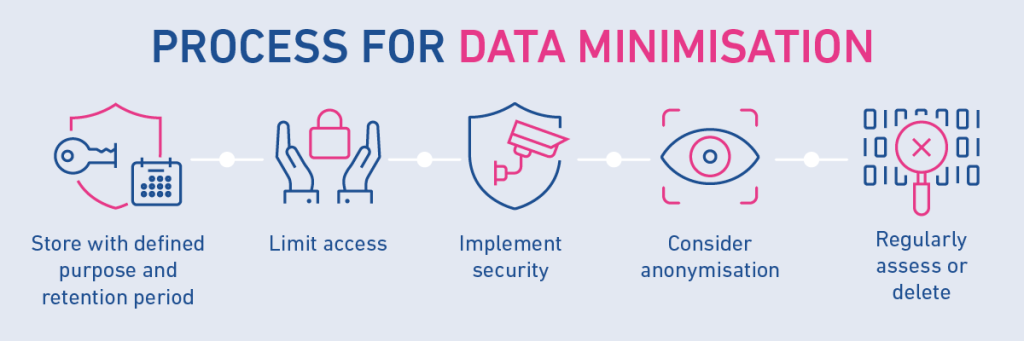
Then, once you have acquired the data you should:
- Store it in a logical way that clearly defines its purpose and retention period
- Limit data access to only those who need it to perform their job
- Implement robust security measures so the data is protected
- Consider if the data could be anonymised or pseudonymised to protect customer’s identities, while still being usable for processing or analysis
- Create regular review points to assess whether data is still needed and if you can delete it.
Key takeaway
Before you start collecting and working with data, there are several key questions your business should consider. By thinking about your company’s data goals and data quality processes from the get-go, you can make the data minimisation process even easier.
How we can help
Data minimisation is fundamental to data privacy obligations and ensuring GDPR compliance. Additionally, with a data minimisation approach you can reduce the risk of security breaches, avoid gathering an excess of unnecessary information, and even ensure a targeted approach to marketing and communications.
We provide tools and services to help businesses like yours manage and improve their data, ensuring accuracy and completeness. We can help you cleanse and validate customer data, improving the accuracy of your records, and implement data governance frameworks to ensure your data is well-understood and managed.
Related services