While the critical importance of data quality is universally understood in financial services, the methods for achieving and maintaining it are evolving. Recent research suggests that a strategy termed “data quality democratisation” may be the key to helping companies cost-effectively maintain better quality data across their operations.
Access to good data is foundational to decisions and processes within financial services. Beyond ensuring compliance, and thereby preventing potential fines and reputational damage, high quality data is the essential key to safe growth.
Today’s customers are increasingly demanding real-time services, personalised features, and a superior customer experience. Meeting these expectations is only possible when you have accurate, recent, and actionable data at your disposal.
So what is data quality democratisation?
In short, data quality democratisation means enabling more people within the organisation to contribute to the challenge of improving data quality. This shift is particularly important to financial services, where accurate client data is mission critical. Poor data quality can directly impact regulatory compliance, financial accuracy, customer trust and ultimately business performance.
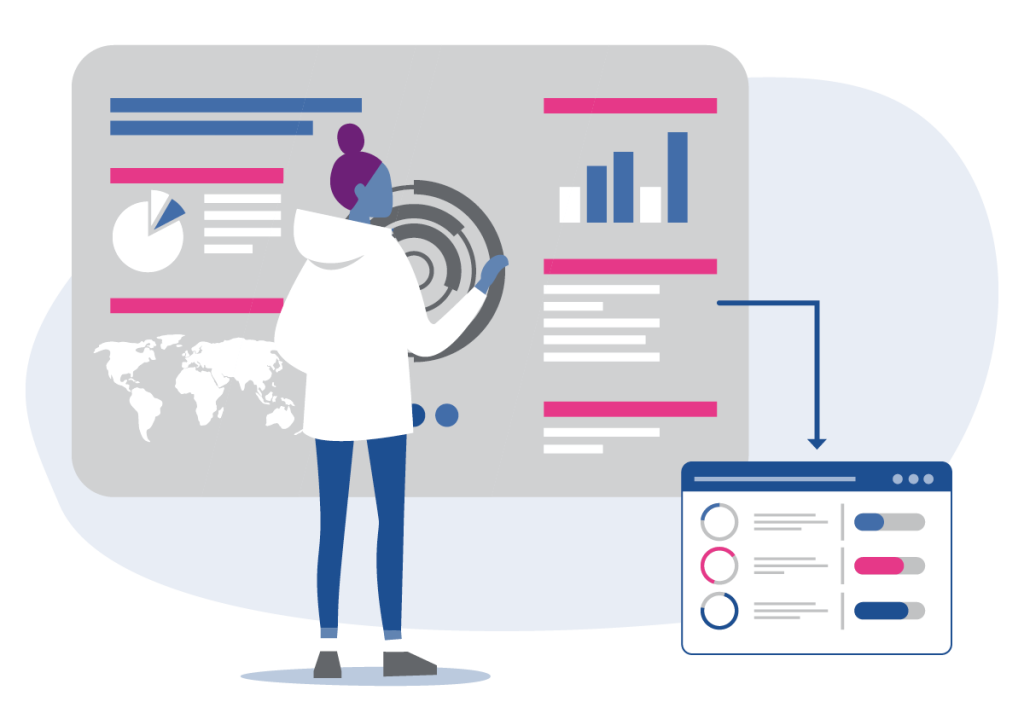
Instead of treating data quality as a technical problem for IT to solve in isolation, democratisation makes high-quality data accessible to more people across the business. From product managers and risk teams to customer service leads, it empowers those who actually use the data to drive the business forward. The result? Fewer bottlenecks, faster decisions, and more confident business outcomes.
How to democratise data quality
Data quality improvements in financial services are moving from reactive data cleaning toward proactive, enterprise-wide data governance that supports automation, advanced analytics, compliance, and ultimately, growth.
Responsibility for data quality often falls between the gaps – with only 1 in 4 organisations having clarity on data ownership. However, by strategically employing the right tools, technologies and governance strategies, financial services companies can implement robust data strategies, shifting data quality from being a heavy burden for the few to a valuable business opportunity for the organisation.
More details can be found in our whitepaper: “Why data quality is being democratised – and how it is driving business success”. Read it now to find out:

Why the democratisation of data is critical for the financial services sector
The barriers to democratisation and how to overcome them
The tools and techniques required to achieve democratisation
The business benefits that ‘data-democratic’ financial services can expect
How can we help?
The intense competition levels in financial services necessitates high-quality data. Data quality has become a critical focus for companies seeking to gain a competitive advantage. Now, there may be a faster and more cost-effective way of achieving data quality and unlocking new opportunities.
Read our report
Why data quality is being democratised – and how it is driving business success
Download nowFurther reading
Experian UK Fraud, Financial and Identity Crime Report 2026
From AI scams to identity fraud - see what’s driving UK financial crime in 2026 in our latest report, and find out how to respond with confidence.
Experian UK Business Credit Trends Index: Q4 2025
Read our latest report on the macroeconomic outlook and current SME credit trends that could help your business stay ahead of the game.
Digital Marketing 2026: Six trends shaping the year ahead
This year’s report explores how advertisers, publishers, and platforms are adapting to another pivotal cycle of change.

Ten reasons why you should partner with Experian Data Quality
Discover ten compelling reasons to partner with Experian Data Quality. Enhance your offering, access expert support, and unlock new opportunities with Aperture Data Studio.

Aperture Data Studio: Improving operational efficiencies for Speedy Hire
Experian's Aperture Data Studio empowered Speedy Hire to achieve unmatched data accuracy and operational efficiency. Find out more.

We’re scaling financial access with data
We’re constantly seeking ways to use data to solve complex problems and create meaningful change. We now offer free digital income and employment verification.

Guide to B2B lead generation in sales
Discover B2B marketing and lead generation strategies to enhance your sales funnel, empower your sales team, and overcome challenges to growth.

Why should energy and water utilities companies share data with Credit Reference Agencies?
For decades, it has been standard practice for businesses to share information with CRAs to support responsible lending. But not all utilities providers do.

How data quality impacts healthcare efficiency and patient outcomes
Read this blog to explore how data impacts patient care, operational efficiency, and regulatory compliance.

The state of media buying today
Media planning and buying is under pressure. With new technologies ever-evolving, consumer behaviour shifting, privacy rules tightening, and third-party cookies losing their once-central role, agencies across the UK and Ireland are rethinking how they reach and measure audiences.
To understand how the industry is adapting, Experian spoke with over 200 media agencies. The findings reveal an industry in transition: agencies are leaning into hybrid targeting, reviving third-party data, and adopting new approaches like AI and curated marketplaces; while at the same time grappling with ethical responsibilities and fragmented measurement.
In this report, we explore:

Signal loss and the limits of first-party data
Why agencies are struggling to scale on first-party data alone, and why third-party strategies are making a comeback
The rise of hybrid targeting
How combining contextual and audience-based approaches is helping agencies adapt to shifting audience behaviours
Curation and AI on the horizon
Why agencies believe curated marketplaces and AI will dominate media buying by 2030, and what’s holding some back
Ethics and measurement in flux
How responsible media and fragmented measurement frameworks are shaping agency decisions today
A sneak peek into:
Media buying in transition: What agencies must do next
The shifting media landscape
The findings of this report reveal an industry in flux, with agencies actively seeking the most effective ways to plan and buy media amid a rapidly evolving landscape. Increased media fragmentation, data protection laws, AI adoption, and the rise of retail media are adding new layers on complexity for buyers and planners. The undercurrent of signal loss remains keenly felt by agencies, with nearly three quarters (73%) of respondents claiming this has made it harder to plan, target, and measure campaigns.
In response, agencies are adapting their strategies and investing in new technologies as they look to find future-proofed solutions. Hybrid targeting models are on the rise, with audience-based targeting complemented by contextual strategies to deliver heightened relevance across both brand and performance campaigns. AI adoption is accelerating rapidly, 85% of interviewees believe it will drive most media decisions by 2030.
Curation is also building significant momentum. While many agencies are only at the beginning of the journey, a substantial number are already seeing value in this approach. Nearly nine in ten (89%) agree that curation will be a key strategic driver in the future. Yet, the shift isn’t just technical, with an overwhelming 92% of agencies saying they’re placing greater emphasis on responsible, ethical decision-making in their media buying. Whilst evolving data, technologies and strategy unlock new opportunities and increased revenue, they also bring short-term uncertainty. One thing is clear: to build confidence and unlock growth in a complex media environment, agencies must deepen their understanding of this fast-evolving ecosystem.
Want to download the full report?
Media buying in transition: What agencies must do next
This report reveals how 200+ media agencies across the UK and Ireland are responding to one of the most disruptive periods in modern media buying. From data and targeting to AI, curation, ethics, and measurement, it explores the challenges and opportunities shaping the industry’s next chapter.

Further reading
Targeting risk before it strikes: DFRS’s data-led prevention model
Learn how Derbyshire Fire & Rescue Service built a data‑led Risk Stratification Index using Mosaic to prioritise fire safety visits across 500,000+ homes.

Data Minimisation: Guide to Collect Less, Protect More
Learn what data minimisation is, why it’s vital for compliance with GDPR, and how you can implement an effective data minimisation process.
Ask the Expert: Top questions from brands and agencies
In this episode we have collated some of the most pressing questions from brands, agencies, partners, ad tech companies, and publishers.

Behavioural segmentation and how it can improve your marketing campaigns
Behavioural targeting gives you the consumer insight to create effective campaigns. Find out what it is, how to use it and examples of it in practice.

Need B2B prospects? Don’t buy a data list
Find out how to execute campaigns that maximise your engagement and response rates without the need for buying data lists.

Experian helps IKEA deliver more personalised and targeted marketing to loyalty program members
Find out how Experian's Address Validation and Mosiac helped IKEA increase spend per customer and achieve greater return on investment (ROI).

Who is buying electric vehicles today and who will tomorrow?
With all non electric cars being phased out by 2035, that still leaves a 12-year journey for those yet to adopt EVs as a new car option and much can happen in that time. Read more.

Who’s most likely to be impacted by the cost of living crisis?
The cost of living crisis is spiralling with price rises across energy, fuel and food. As the situation evolves, we forecast the shift in consumer spending and behaviour.

Global Insights Report: April 2022
We surveyed 6,000 consumers and 2,000 businesses worldwide to learn more about how, why, and where consumers interact with businesses online.